Seasonal Cooking
Seasonal produce and the quiet logic of a well-structured plate
Tobias Ashcroft·
·9 min read
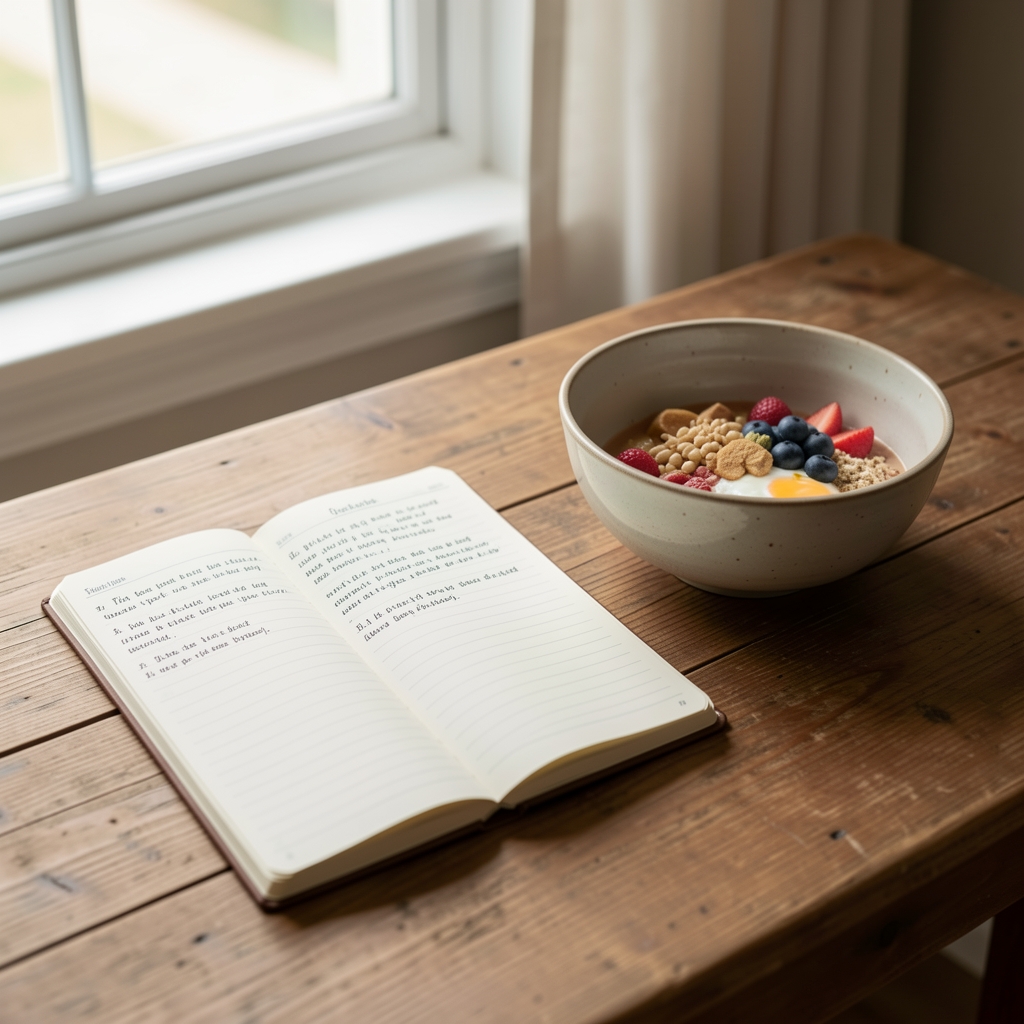
The notebook was opened on a Monday morning in January. The instruction to myself was straightforward: document each plate before eating it — its contents, the time, the approximate quantity, the context. Seven days. No adjustments to the actual eating, only to the observation of it. What arrived by Friday was not what I had anticipated.
Keeping a food diary is not a new practice. Nutrition professionals have used structured recording as a reflective tool for decades. But the version I undertook in the first week of the year was not structured around caloric accounting or macronutrient ratios. It was, in the simplest terms, an observational exercise — the kind a field researcher might apply to a recurring natural phenomenon.
Each entry in the notebook carried four details: the time, the setting, the composition of the meal, and a brief note on how the eating felt. The last column proved the most instructive. Words like "distracted", "rushed", "deliberate", "slow", "generous" appeared with a consistency that revealed patterns invisible in the food itself.
By Tuesday, a pattern had already emerged. The meals eaten at the table — even when simple — were described as more satisfying than those eaten elsewhere. The grain bowl consumed standing at the kitchen counter, though nutritionally equivalent to the same bowl consumed seated, registered differently in the written record. This was not a surprise to anyone who has read the published research on attentive eating, but encountering it in one's own handwriting has a different quality.
The word "balanced" appears frequently in everyday conversation about food. It is offered as both aspiration and instruction — eat a balanced diet, maintain a balanced plate. But balance is a dynamic state, not a fixed one. What emerged from the seven-day record was a more nuanced picture: balance shifts across the day, the week, and the season, and pursuing a single fixed ratio is less useful than attending to what a day actually requires.
Wednesday's entry is illustrative. Lunch was heavier than usual — a slow-cooked lentil preparation with root vegetables, accompanied by a dense rye bread. The afternoon moved slowly, without hunger, with an unusual quality of focus. The evening meal was correspondingly lighter: soft-cooked eggs, watercress, a few slices of good cheese. The two meals formed a rhythm of their own — the week's balance was composed not plate by plate, but day by day.
The most instructive food diary is not the one that records perfection. It is the one that records honestly what happens on a Tuesday in February.
One of the clearer findings from the week concerned the proportion of plant matter on each plate. Not as a moral instruction, but as a structural observation: plates where vegetables and fruits composed more than half the visible area tended to be described with words like "clean", "clear", "steady". This was not always correlated with hunger satiation, but with a quality of feeling after the meal — a lightness without emptiness.
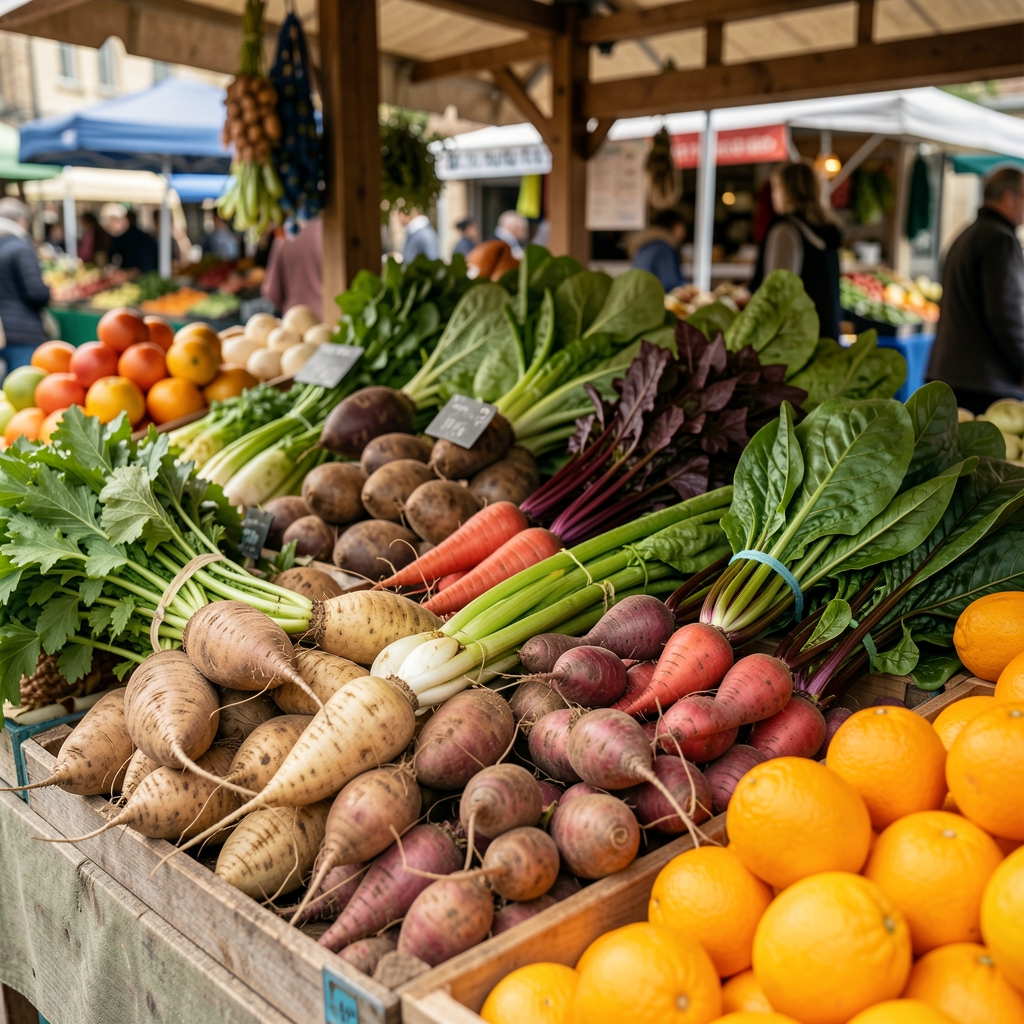
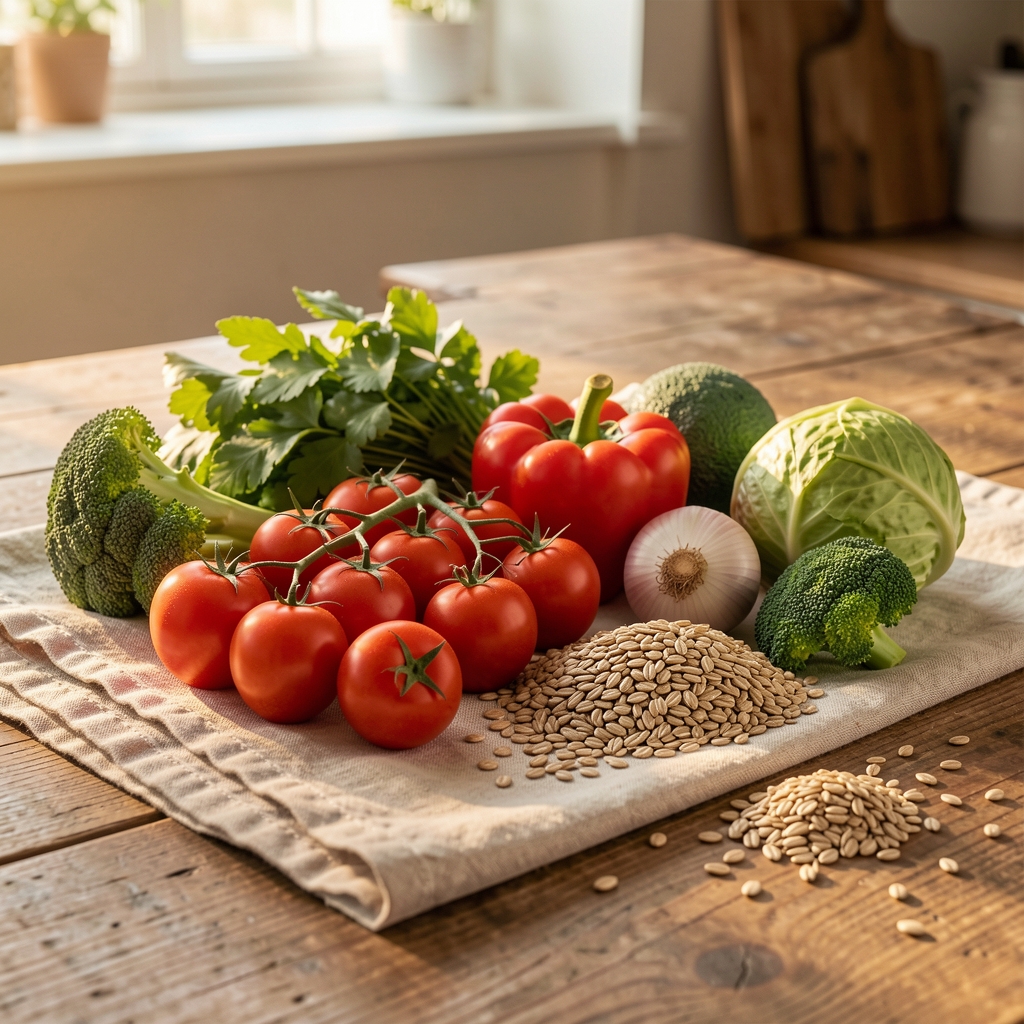
Leafy greens appeared most often in the midday entries. By the end of the week, I had consumed a considerable variety without intending to: spinach, watercress, raw fennel, roasted courgette, braised cavolo nero, thinly sliced raw cabbage dressed with lemon and oil. The variety was incidental — the result of purchasing what the market offered and building around it rather than planning from a fixed list. Seasonal availability did the work of dietary diversity without requiring it to be designed in advance.
Fruit appeared less deliberately. An apple in the afternoon. Half a grapefruit alongside scrambled eggs on Thursday. A handful of pomegranate seeds scattered across a grain salad. None of these were planned interventions; they were the result of having fruit visible on the kitchen surface rather than stored behind a refrigerator door.
The portion column of the notebook was the most difficult to complete consistently. I had not calibrated my portions in any technical sense; the entries were qualitative — "generous", "moderate", "small", "about right". What they revealed, across seven days, was that my sense of an appropriate quantity shifted significantly based on when I had last eaten and how physically active the preceding hours had been.
On days that included a sustained walk of forty minutes or more, the evening meal was notably larger in my own estimation — yet I was not more hungry by the clock. The appetite was qualitatively different: wider, more encompassing. The body seemed to register the expenditure and adjust the request accordingly. Attending to this signal, rather than eating to a fixed plan, meant that portions varied naturally across the week without planning.
Published research on appetite regulation discusses this phenomenon in the context of energy compensation — the body's tendency to adjust intake in response to expenditure. But the lived version of this, documented in a small notebook, felt less like a metabolic mechanism and more like a conversation. The week's eating was, in some sense, a dialogue between the body and its circumstances.
The final observation from the seven-day record concerned planning. I had not planned the week's meals in advance — a deliberate choice, since the exercise was meant to observe existing practice rather than an ideal one. But by Thursday, a degree of informal structure had emerged without being imposed. Certain ingredients reappeared across meals, connected by a logic of use and availability. The slow-cooked lentils from Wednesday appeared again on Friday, transformed by the addition of smoked paprika and eaten cold with flatbread. A bunch of coriander bought for Tuesday's supper appeared in three subsequent meals.
This emergent structure — not quite meal planning, but something close to considered cooking across a period — produced less waste, more variety, and a quality of engagement with ingredients that would not have existed if each meal had been planned and purchased independently. The logic of the whole-week larder is a kind of planning that does not feel like planning.
Articles published on Darlev Notebook are editorial in nature and reflect the writers' observations on everyday wellness practices. The content is not intended as professional advice, nor as guidance for the management of any specific condition. Readers with specific concerns about their daily routines are encouraged to speak with a qualified wellness professional.